


Why Choose Us
Reliable Quality Assurance
Rigorous quality control procedures ensure that every product leaving their facility meets the highest standards of reliability and performance.
Customization
Provide customized solutions to meet specific client requirements, allowing for tailored bearings for unique applications.
Advanced Manufacturing Processes
With state-of-the-art equipment and techniques, Weichuang ensures high-quality production and consistent results.
Technical Support
The company offers comprehensive technical support to assist customers in selecting the right bearing for their application and resolving any issues that may arise.

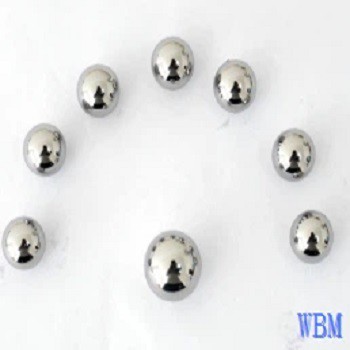
Quality precision:G5,G10,G16 Our Chrome ball usually produce according to GBT 308.1-2013 and ISO 3290-1:2014 standards. Hardness will be customized base on your requirement.

2022 New Product Taper Roller With Hole In The Center
Henan Weichuang Bearing Technology Co.,Ltd successfully finished the development of taper roller with hole in the center. Heat treatment was done by case harden. This kind of roller widely used in wind turbines bearing or special industries bearing. New energy bearing brings a new increase point in bearing market. Weichuang purchase two plug in type centerless grinder and one plug in type honing machine. Expand the taper rollers production capacity, now can supply roller diameter from 5 to 80mm.

Spherical roller bearings have two rows of symmetrical rollers, a common sphered outer ring raceway and two inner ring raceways inclined at an angle to the bearing axis. The centre point of the sphere in the outer ring raceway is at the bearing axis. About Us Henan Weichuang Bearing Precision.
Professional provider of bearing cold heading dies, taper rollers, grinding tools and detection equipment and comprehensive service of consultation/marketing in supply chain in bearing industry. Weichuang Bearing Precision Technology ,wholeheartedly serves the customers. In addition to free

Cylindrical rollers are a type of engineered product that finds widespread application in various industries such as petrochemicals, steel, mining, power generation, and transportation. These rollers provide rotational motion between two surfaces, which makes them ideal for many industrial applications. If you are seeking a reliable and high-quality cylindrical roller with exceptional performance to recommend to your customers, you have come to the right place. This article will introduce you to the details of our cylindrical roller product and the features that make it stand out.

About Us Henan Weichuang Bearing Precision Technology Co.,Ltd.(WBM) was founded in 1988 which located in Lilou industrial zone, Luolong district, Luoyang, PRC. WBM is a professional provider of bearing cold heading dies, taper rollers, grinding tools and detection equipment and comprehensive.

Conical rollers are an essential component of many industrial machines, used for a variety of purposes such as belt conveyors, printing presses, and packaging machines. They are typically made of high-quality steel, designed to withstand heavy loads, and provide long-lasting performance. Our company, located in China, takes pride in manufacturing the most durable and reliable conical rollers that have gained recognition globally. In this product introduction, we will highlight the key features and benefits of our conical rollers that make them stand out from the competition.

Introducing our world-class Carbon Steel Ball, the ultimate industrial solution for a wide range of applications. We, as a leading manufacturer of steel balls in China, take pride in producing the finest quality and durable products that meet global standards. Our traceable production process and strict quality control ensure the best quality and consistency from batch to batch.

Welcome to our company's product introduction to the Metric Steel Ball. We are excited to present the key features and benefits of our high-quality Metric Steel Ball that is manufactured in China. As the leading manufacturer and wholesale supplier of this product, we take pride in our consistent effort to deliver quality products to meet global demand.
What is Din 5401 Steel Ball?
DIN 5401 steel balls refer to precision steel balls that conform to the standards set by the German Institute for Standardization (Deutsches Institut für Normung). These balls are used in a variety of engineering applications where high precision and quality are required, such as in bearings, ball screws, and other mechanical components.
What Are The Different Uses Of Din 5401 Steel Ball?
Steel balls have several uses in different industries due to their unique properties and versatility. Here are some of the popular applications of steel balls:
Bearings: Steel balls play a crucial role in the manufacturing of ball bearings. They reduce friction and enable smooth rotation in various machines and equipment, including automotive engines, industrial pumps, and conveyor systems.
Automotive Industry: Steel balls find application in various automotive components, such as steering systems, transmissions, and engines. Their exceptional load-bearing capacity and resistance to wear and fatigue make them indispensable for ensuring reliable and efficient operation.
Aerospace Industry: In the aerospace industry, steel balls are utilized in aircraft engines, landing gear mechanisms, and control systems. Their ability to withstand high temperatures, extreme pressures, and harsh environments makes them indispensable in this field.
Machinery and Equipment: Steel balls are essential components in machinery and equipment across different industries. They are commonly used in valves, couplings, gears, and other mechanical systems to facilitate smooth movement, reduce friction, and enhance operational efficiency.
Grinding and Milling: Steel balls are used in ball mills and grinding machines for crushing and grinding materials. They assist in reducing particle size and blending various substances in industries such as mining, pharmaceuticals, and ceramics.
Carbon Steel Balls
These are made of low carbon steel and are the most economical type of steel balls. They are used in applications where high precision is not required.
Chrome Steel Balls
These are made of high carbon steel that has been treated with a chrome finish. They are used in high precision applications, such as in bearings and ball screws.
Stainless Steel Balls
These are made of high-grade stainless steel and are resistant to corrosion. They are often used in applications where rust or corrosion could cause problems.
Tool Steel Balls
These are made of high-quality tool steel and are used in applications where hardness and wear resistance are important.
Brass Balls
These are made of brass and are used in applications where a non-ferrous metal is required.
Flashing
The excess material, called flash or burrs, needs to be filed away. This is done in the flashing process, also referred to as filing. This removes the flash, but they are not yet perfectly round and the metal is still soft.
Soft grinding
Some manufacturers will then put the balls through a soft grinding process. It is referred to as soft because the material is not yet hardened. This operation is similar to the flashing process but an abrasive grinding stone is used instead of one of the metal plates.
Heat treating
Now that the balls have had the excess material removed and are relatively round, they are put through a heat-treating process to harden and strengthen. The balls are heated to approximately 1,500° F and then quenched in an oil bath. They are heated again to a much lower temperature. approximately 325° F, resulting in a ball that is through-hardened.
Descaling
After heat treating, the balls are discolored and covered with oxide deposits. To remove these deposits, the balls are put through a process called descaling. Descaling involves using a chemical agent, usually an acidic compound, to remove the build-up on the balls.
Grinding
Now that the balls are hardened and relatively round, they are nearing the end of the manufacturing process. The next step is to grind the balls to size them and improve roundness geometry. The process is similar to the soft grinding process used earlier - the balls are rolled between a steel plate and a fine-grit grinding wheel.
Lapping
The last step in the process is to lap the balls. Lapping is a superfinishing process that improves the surface finish or geometry and removes small amounts of material so that the balls attain the tight, required tolerances.
Cleaning and Inspection
The steel balls are thoroughly cleaned to remove any residues from the manufacturing process. They are then inspected for quality, size, and surface finish.
Packaging
After passing quality control, the steel balls are packaged and prepared for shipping.
Working Theory of Din 5401 Steel Ball
Material Selection
DIN 5401 steel balls are made from high-quality steel alloys chosen for their strength, hardness, and wear resistance. Common materials include chrome steel (also known as alloy steel), stainless steel, or carbon steel, each with different properties suitable for various operating conditions.
Hot Forging
The initial stage in manufacturing involves hot forging. A billet of steel is heated to a high temperature and then pressed into a spherical die under high pressure. Hot forging ensures that the steel flows plastically, filling the mold cavity and forming a nearly perfect sphere.
Heat Treatment
After forging, the steel balls undergo heat treatment to enhance their mechanical properties. The most common treatments are quenching and tempering. Quenching involves cooling the balls rapidly in water or oil to increase hardness. Tempering follows to relieve internal stresses and improve toughness without significantly reducing hardness.
Grinding and Lapping
To achieve the necessary precision and surface finish, the steel balls are subjected to grinding and lapping processes. Grinding removes excess material and brings the balls close to their final size, while lapping further refines the surface by removing microscopic imperfections through fine abrasive compounds.
Quality Control
Throughout manufacturing, strict quality control measures ensure that the steel balls meet the DIN 5401 standards. This includes checks for size, roundness, hardness, surface roughness, and geometric tolerances. Non-conforming balls are rejected to maintain the integrity of the batch.
Application in Mechanical Systems
When incorporated into mechanical systems like bearings or ball screws, the steel balls must exhibit low friction, high load-bearing capacity, and long service life. The precision and uniformity of DIN 5401 steel balls ensure smooth operation and minimize wear, which is crucial for maintaining system efficiency and preventing failures.
Steel balls are important basic components, especially precision industrial steel balls, which play a huge role in the development of the national economy. Under some special conditions, steel balls of special materials are often needed to complete the functions required in different environments. In fact, some special material steel balls have been widely used in various fields of the national economy, including 9Cr18, 3Cr13 stainless steel, copper, aluminum, titanium alloy steel, agate, glass, ceramic balls, etc. Their promotion and application not only promote the development of the steel ball production industry, but also promote the technological development and progress of related industries.

The future development prospects of Din 5401 Steel Ball
With the development of manufacturing industry and the increasing demand for high precision in various industries, bearing steel balls are playing an increasingly important role in the industrial field. With the improvement of domestic technical level, the quality of bearing steel balls continues to improve and its performance is constantly updated, giving it a wider application prospect.
The applications of bearing steel balls cover a wide range of fields such as rail transit, aerospace, shipbuilding, and machinery manufacturing. They are a necessity for modern high-speed, precision, and intelligent manufacturing. In the future, as new technologies continue to emerge, the application scenarios of bearing steel balls will become more diverse. Whether in airships in the aviation field or in high-tech fields such as intelligent robots, bearing steel balls will play an important role. .
At the same time, with the continuous expansion of the domestic market and the improvement of the industrial chain, the localization of bearing steel balls will also become more mature. In the future, the bearing steel ball industry will face more opportunities and challenges. It needs to focus on technology, quality, production efficiency and other aspects, and continue to innovate and develop in order to stand out in the fierce industry competition.
In short, the development prospects of bearing steel balls are very broad, and they will play an increasingly important role in modern industry. As a practitioner in the manufacturing industry, Kangda Steel Ball must seize the opportunities of the times, continue to explore and innovate, improve quality, and promote the healthy and prosperous development of this industry.
Certifications


Our Factory
WBM is a professional bearing supplier established in 1988, mainly providing bearing cold heading dies, tapered rollers, grinding tools and testing equipment, as well as consulting/trading services in the supply chain of the bearing industry. The company has a quality management system integrating design, production, sales, service and research, located in Lilu Industrial Park, Luolong District, Luoyang, China, the factory covers an area of 36,300 square meters. At present, Weichuang has 80 invention patents, providing customers with high-quality products and services.

fAQ
Hot Tags: din 5401 steel ball, China din 5401 steel ball manufacturers, suppliers, factory, Interroll Tapered Roller, national header die, tungsten carbide cold heading dies, taper roller, cold forging, Tungsten Carbide Die