


Why Choose Us
Reliable Quality Assurance
Rigorous quality control procedures ensure that every product leaving their facility meets the highest standards of reliability and performance.
Customization
Provide customized solutions to meet specific client requirements, allowing for tailored bearings for unique applications.
Advanced Manufacturing Processes
With state-of-the-art equipment and techniques, Weichuang ensures high-quality production and consistent results.
Technical Support
The company offers comprehensive technical support to assist customers in selecting the right bearing for their application and resolving any issues that may arise.

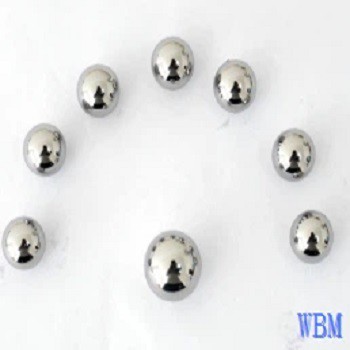
Welcome to our latest product, the Inch Steel Ball. Our company is a leading manufacturer of high-quality steel balls, and we are proud to offer this new product to our international customers.

2022 New Product Taper Roller With Hole In The Center
Henan Weichuang Bearing Technology Co.,Ltd successfully finished the development of taper roller with hole in the center. Heat treatment was done by case harden. This kind of roller widely used in wind turbines bearing or special industries bearing. New energy bearing brings a new increase point in bearing market. Weichuang purchase two plug in type centerless grinder and one plug in type honing machine. Expand the taper rollers production capacity, now can supply roller diameter from 5 to 80mm.

Spherical roller bearings have two rows of symmetrical rollers, a common sphered outer ring raceway and two inner ring raceways inclined at an angle to the bearing axis. The centre point of the sphere in the outer ring raceway is at the bearing axis. About Us Henan Weichuang Bearing Precision.
Professional provider of bearing cold heading dies, taper rollers, grinding tools and detection equipment and comprehensive service of consultation/marketing in supply chain in bearing industry. Weichuang Bearing Precision Technology ,wholeheartedly serves the customers. In addition to free

Cylindrical rollers are a type of engineered product that finds widespread application in various industries such as petrochemicals, steel, mining, power generation, and transportation. These rollers provide rotational motion between two surfaces, which makes them ideal for many industrial applications. If you are seeking a reliable and high-quality cylindrical roller with exceptional performance to recommend to your customers, you have come to the right place. This article will introduce you to the details of our cylindrical roller product and the features that make it stand out.

About Us Henan Weichuang Bearing Precision Technology Co.,Ltd.(WBM) was founded in 1988 which located in Lilou industrial zone, Luolong district, Luoyang, PRC. WBM is a professional provider of bearing cold heading dies, taper rollers, grinding tools and detection equipment and comprehensive.

Conical rollers are an essential component of many industrial machines, used for a variety of purposes such as belt conveyors, printing presses, and packaging machines. They are typically made of high-quality steel, designed to withstand heavy loads, and provide long-lasting performance. Our company, located in China, takes pride in manufacturing the most durable and reliable conical rollers that have gained recognition globally. In this product introduction, we will highlight the key features and benefits of our conical rollers that make them stand out from the competition.

Introducing our world-class Carbon Steel Ball, the ultimate industrial solution for a wide range of applications. We, as a leading manufacturer of steel balls in China, take pride in producing the finest quality and durable products that meet global standards. Our traceable production process and strict quality control ensure the best quality and consistency from batch to batch.

Welcome to our company's product introduction to the Metric Steel Ball. We are excited to present the key features and benefits of our high-quality Metric Steel Ball that is manufactured in China. As the leading manufacturer and wholesale supplier of this product, we take pride in our consistent effort to deliver quality products to meet global demand.
What is Metal Ball?
A metal ball is a spherical object made entirely of metal. It can be solid or hollow, with the latter often referred to as a metal shell or a metal sphere. Metals commonly used to create balls include steel, brass, aluminum, copper, and lead, among others. These balls can serve various purposes depending on their size, material, and intended application.
Metal rollers are used in different fragments of ventures including cars, railroads, metallurgy, designing, producing, material, steel, electric power, mining, accuracy instrument, athletic gear, and some more. It works in an unambiguous way for every one of the areas and has broad working that is exceptionally famous for every area.
With its rising prominence, it has fortified its presence in different areas with its exhibition and believability. There are accessible in a wide reach that contrasts in different regards and serve various prerequisites of businesses.
Quality metal rollers actually diminish the rotational rubbing and support outspread and pivotal burdens. There are many organizations in the business that offers and furnishes their clients with top-notch metal rollers. All items are quality driven and are presented at the most practical costs.
The actually talented and educated experts and staff work widely to give the most imaginative and useful metal rollers. This guarantees consumer loyalty and has empowered the organization to confront a wide range of difficulties with equivalent energy and excitement.
Features of Metal Ball
High Strength: Metals like steel and titanium are known for their high tensile strength, which allows metal balls to withstand significant forces without deforming or breaking.
Durability: Metal balls are resistant to wear, corrosion, and impact, making them suitable for harsh environments and long-term use.
Smooth Surface: The manufacturing process ensures that metal balls have a very smooth surface, which is beneficial for minimizing friction when used in bearings or moving parts.
Versatility:Our Metal Ball's versatility means that merchants can use it in a variety of applications, creating a broader market for our product.
Aesthetics: In addition to the Metal Ball's functionality, its shiny and polished finish adds value to our customer's products.
Electrical Conductivity: Most metals are good conductors of electricity, which makes metal balls suitable for electrical applications, such as in switches or connectors.
Thermal Conductivity: Metals also tend to have high thermal conductivity, which allows for efficient heat transfer, useful in applications where temperature regulation is important.
Recyclability: Metals are recyclable, meaning that spent or scrap metal balls can be melted down and reused, reducing waste and conserving resources.
Magnetic Properties: Certain metals, like iron or neodymium, have magnetic properties, which can be exploited in applications requiring attraction or repulsion, such as in sensors or holding devices.
Customization: Metal balls can be customized in terms of size, material composition, and surface treatment to meet specific application requirements.
Applications of metal balls include
Hardware and Glass Industries
The Metal Ball is widely used in the hardware and glass industries as the bearings for the sliding door rollers or window sliding rollers. Additionally, it can be used in locking mechanisms, hinges, and other hardware products. Customers can choose from different sizes to fit their specific use cases.
Automotive and Aerospace Industries
In the automotive and aerospace industries, the Metal Ball is used as a critical component for many applications. In cars, it is utilized in wheel bearings, steering systems, transmissions, and suspension systems. In the aerospace industry, Metal Balls are necessary parts of the guidance and control systems of missile and rocket propulsion mechanisms.
Medical Industry
In the medical industry, precision is paramount. The Metal Ball is used in surgical instruments, temporary implants, and in other applications requiring high precision and consistency. Our Metal Ball undergoes rigorous quality control checks through the manufacturing process.
Toy Industry
The Metal Ball is also relevant in the toy industry, usually as bearings for metal toy cars or other toys that require rolling ball function. Our product is non-toxic and safe for children to play with.
Process of Metal Ball
Raw Material Selection: The first step is to select the appropriate metal based on the desired properties of the final ball, such as strength, weight, and cost. Common metals include steel, brass, aluminum, and stainless steel.
Preform Creation: The raw metal is melted and then poured into a mold to create a preform, or rough shape, of the metal ball. This preform is typically slightly larger than the finished ball to account for material removal during the subsequent steps.
Hot Forging: The preform is then heated to a high temperature until it becomes malleable. It is placed between dies and subjected to high pressure, which shapes it into a near-perfect sphere. This step reduces internal stresses and improves the ball's structural integrity.
Hot Isostatic Pressing (HIP): Some metal balls may undergo HIP, a process that applies uniform pressure to the ball while it is heated to a high temperature. This removes any internal defects and further enhances the ball's density and strength.
Machining: After forging, the metal ball may require machining to achieve the exact size and surface finish. This step is performed using lathes or CNC (Computer Numerical Control) machines, which remove excess material with precision.
Heat Treatment: To improve the mechanical properties of the metal ball, it may be subjected to heat treatment. This involves heating the ball to a specific temperature, holding it at that temperature for a certain period, and then cooling it slowly or rapidly, depending on the desired outcome.
Grinding and Polishing: The surface of the metal ball is ground and polished to achieve the required smoothness and sphericity. This step is critical for applications where the ball will interact with other components, as it minimizes friction and wear.
Quality Control: Throughout the production process, quality control measures are in place to ensure that each ball meets the necessary specifications. This includes checking for size, roundness, surface finish, and material composition.
Coating and Finishing: Depending on the application, the metal ball may receive a coating to provide additional properties such as corrosion resistance, lubrication, or enhanced appearance. Common coatings include zinc plating, chrome plating, or powder coating.
Packaging and Dispatch: Finally, the metal balls are cleaned, inspected one last time, packaged to prevent damage during transport, and dispatched to the customer.
Certifications


Our Factory
WBM is a professional bearing supplier established in 1988, mainly providing bearing cold heading dies, tapered rollers, grinding tools and testing equipment, as well as consulting/trading services in the supply chain of the bearing industry. The company has a quality management system integrating design, production, sales, service and research, located in Lilu Industrial Park, Luolong District, Luoyang, China, the factory covers an area of 36,300 square meters. At present, Weichuang has 80 invention patents, providing customers with high-quality products and services.

fAQ
Hot Tags: metal ball, China metal ball manufacturers, suppliers, factory, steel balls, purpose of steel ball, bulk purchase discount steel ball, special offer steel ball, precision balls, promotional steel ball